

Thinking SSTran, Ragemaster.. Ground Mounted Scenario..
You can have a zillion feet of ground wires buried under the antenna. As long as they are horizontal, they don't radiate. If one has the Xmtr mounted 3' above the common connection point of the zillion wire ground plane with a short radiator in a vertical orentation, the ground wire going from the Xmtr to the zillion wire ground area can add to the field strength. That piece of vertical wire from the Xmtr to the artifical ground becomes part of the radiator. Even though it's short, it becomes part of a dipole antenna. The longer the vertical ground wire is, the more it becomes a radiating element. That fact is what gets folks in trouble..
An antenna is just a capacitor. You apply a sine wave to it, it tries to find a resonate spot, which is made through inductance, capcitance and resistance. The horizontal part of it just collects alternating energy from the radiating element to feed the coil and other associated circuits the opposite half of the sine wave to help find the sweetest spot towards resonance. Being that we are stuck with a very short "Legal" length radiator, we ain't gonna find a very good sweet spot, due to the wavelength..
It's sorta like a ping-pong game. The ground is the champ and the radiator isn't quite as good. The ground doesn't miss anything but the radiator misses a few now and then. The radiator serves, the ground returns. The farther away from resonance, the better the radiator is in returning. (They smack 'um back and forth until the radiator misses one, the radiator serves again) The closer to resonance the system is, the better the ground gits and smacks the balls out into the air past the radiator.. Relatively speaking.. 😉
Now, Back to my Robin Trower Concert..
Rich, the fact is you stated (ok not your exact words but the reasoning is the same) any unburied conductor(s) of any configuration attached to an antenna system comprised of the lead in, antenna and wire to the ground connection which extends the total length of the antenna system to more than 3 meters is not permitted per Part 15.219(b).
So, by that statement you are implying the FCC position is they would not permit a top hat or elevated counterpoise connected to an antenna system which causes the total length to be in excess of 3 meters.
Perhaps your point is that you are implying this without actually stating this.
I and others may have missed it, End 80, so if you have accurate knowledge of the specific position of the FCC about the use of elevated counterpoises and/or top-hat loading with Part 15 AM systems, would you mind posting such facts in this thread?
Well.. It's was not the elevated counterpoise or top-hat loading per se of which I was referring to; but rather the additional length being added to the antenna system by the employment of those elevated radials/tophat..
Thus resulting in a violation of the 3 meter rule..
However, after reading 12voltmans post above.. I rather confused.. I have always believed that the reason ground radials did not radiate was due to its direct contact with earth.. but his post above states the reason radials do not radiate is because they are horizontal --?? REALLY?
Is this not the same as saying that a horizontally positioned antenna will not radiate? Certainly this isn't true. ...??
Richard, the reason I expressed an amazement that you "of all people" made the statement that the FCC's position on an elevated counterpoise is unknown, is because I considered it to be equivalent to saying: The FCC's position on an antenna system exceeding 3 meters is unknown..
Now, I'm simply awe struck at what is being described... I'm quite confused.
Mram said:
So, by that statement you (R Fry) are implying the FCC position is they would not permit a top hat or elevated counterpoise connected to an antenna system which causes the total length to be in excess of 3 meters.
Where as I heard R Fry say the position of the FCC on a top hat or elevated counterpoise is unknown..
Maybe I need to read this entire thread again, becuase I'm totally losing grasp of what has or hasn't been stated..
sigh
Yes, Rich did say the FCC position on top-hats and counterpoise is unknown.
But since top-hats and counterpoise are wire of "any" configuration AND attached to the antenna system AND add conductor length it would seem the FCC would not allow them since the total length of the antenna system would exceed 3 meters and Part 15.219 does not permit length in excess of 3 meters.
Therefore by default the FCC position on top-hats and elevated counterpoise logically would be to not allow either.
According to Rich, buried wires forming an RF ground system do not contribute to the far field regardless of their configuration. If the RF ground wires are above ground AND symetrical (read counterpoise) they do not contribute to the far field so one would think it is allowable, same for a top-hat.
The confusion revolves around the fact that top-hats and properly designed elevated counterpoise themselves do not radiate (just as buried wires) but they are still wires of "any" configuration attached to the antenna system. According to Rich, wires of "any" configuration attached to the antenna system which extend the total antenna system length beyond 3 meters are not allowed per Part 15.219.
For that matter, buried wires extend the antenna also and if anyone says "yeah, but they don't radiate", well neither do properly designed counterpoise or top-hats.
I'm out of ways to present this... Just deal with it if they knock on your door!
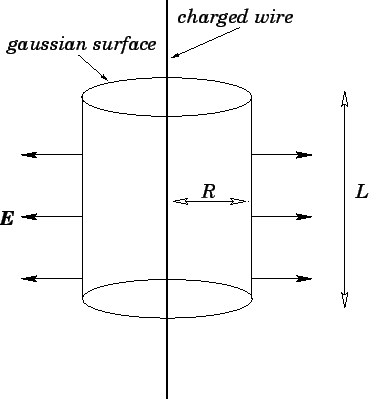
Voltage emits away from the wire while current runs with the wire. Voltage is signal..
If a horzontal wire is buried, the earth is gonna eat up the voltage due to resistance.. Hence, no signal. It will, however, be induced to create current and the Xmtr sees this and reacts to it.
Therefore.. It is plausible that an elevated ground plane might be deemed a legal install??
It seems discussions in the past had concluded otherwise...
Again.. I really thought elevated radials radiated and were not permitted
It's all speculative at best.
As the science says a properly designed "ground plane" does not radiate, it should not matter.
The end result is better efficiency which means better field strength which under 15.219 should not matter but, someone in this thread stated that wires of "any" configuration which extend the length beyond 3 meters are not allowed by 15.219 with no mention of whether or not the wires radiate only that if buried it's OK, if not buried then NOT OK.
That being the case, no-you can't use an elevated "ground plane" or top-hat.
I'm not saying you can't or shouldn't use an elevated "ground plane" or a buried one for that matter. I'm saying based on 15.219 it seems to be disallowed as it extends the length beyond 3 meters.
This should really confuse everyone: That eight foot ground rod is a conductor that extends the total length beyond 3 meters. The rule doesn't differentiate between radiating and non-radiating, only the total length matters. Ouch...
If it's not buried, it can and will radiate. If it's buried below the earth, it's not considered an "Intentional Radiator". Anything above ground level is, including the actual ground wire that connects the Xmtr to the grounding rod or whatever, the audio cables, power connections, any lead exiting the Xmtr above ground level to control it can be, and will be, considered an "Intentional Radiator"..
The only way to stay "Legal" is to ground mount the Xmtr and run all of the control/power cabling under ground to the Xmtr location with the "Intentional Radiator", including the length of the ground connection from the Xmtr added to the length of the "Intentional Radiator" to whatever buried grounding that one has below it, not to exceed 3 meters.. Period..
This was explained to me in detail from a high ranking employee of Motorola because I asked him myself and he deals with install related issues all of the time for corporate and government entities. Take it for what its worth..
If one had an above ground return or ground plane, you'd be shooting yourself in the foot! An elevated "Ground" will radiate and interfere with the productivity of the intentional radiator. Stray RF being out of phase will be nulling out the energy being produced by the real radiator. It would take some tricky tuning to avoid this..
"If it's not buried, it can and will radiate."
Answer: Counterpoise
"If it's buried below the earth, it's not considered an "Intentional Radiator"."
Answer: VLF submarine communication
"Anything above ground level is, including the actual ground wire that connects the Xmtr to the grounding rod or whatever, the audio cables, power connections, any lead exiting the Xmtr above ground level to control it can be, and will be, considered an "Intentional Radiator".."
Answer: Un-Intentional Radiator (any device which creates radio frequency energy within itself, which is then unintentionally radiated from the device)
"Take it for what its worth.."
Answer: It's not worth it-The final authority is the FCC. They're not here and they certified the Talking House/I A.M. system which is a total contradiction based upon this thread.
Another contradiction exists with the TalkingHouse and ATU as certified, and that is that the certification counts the ATU as the final RF stage.
Otherwise there's a wide consensus that the final RF stage of a part 15 transmitter is the output transistor.
VLF submarine communication - Different frequency.. Different characteristics..
Un-Intentional Radiator - Is exactly that. Not intended to emit RF and not a part of an antenna system..
As for the Talking House/I A.M. system..
If a coax is balanced at both ends properly, it will not emit RF. The shield is RF isolated at the antenna end or it couldn't be a balanced unit and do its job. Re: Balun or Phasing Harness. If it wasn't balanced, no power would reach the other end and it would spew RF recklessly everywhere. The RF is controlled or contained until it reaches the antenna, which is the intentional radiator..
Why is this so hard to undrestand? It's a typical antenna system that's been used for decades! Obviously the engineers at Talking House/I A.M. figured out a design that contains the RF within the coax and isolates it at the antenna end to avoid the coax from becoming part of the antenna, giving it some usage flexibility for realitors. It was designed to sell houses with the antenna sitting on the ground out in the lawn or a inside floor of a room, not stuck 30' in the air with a ground wire running from it, conveniently calling it a lightining protection ground! Of course, by adding the wire to it is going to make it more efficient and break the rules.. Duh! People abused it and now it's not around any more..
As for the Talking House/I A.M. system.. if a coax is balanced at both ends properly, it will not emit RF. The shield is RF isolated at the antenna end or it couldn't be a balanced unit and do its job. Re: Balun or Phasing Harness. If it wasn't balanced, no power would reach the other end and it would spew RF recklessly everywhere. The RF is controlled or contained until it reaches the antenna, which is the intentional radiator.
Why is this so hard to undrestand? It's a typical antenna system that's been used for decades! Obviously the engineers at Talking House/I A.M. figured out a design that contains the RF within the coax and isolates it at the antenna end to avoid the coax from becoming part of the antenna, ...
Sorry, but there are some basic issues with the quotes above.
The ATU circuit shown in the patent (clip below) provided no means to keep r-f current from flowing back down the outer surface of the coax shield.
The inside surface of a coax cable shield is not at zero (earth) potential everywhere along its length. When the terminating load matches the impedance of the coax, the shield carries the same current/power as the coax inner conductor, just 180 degrees out of phase. None of the shield current applied at the input end of the coax flows along the outer surface of the shield to reach the output end of the coax, because skin effect confines it to the inner surface of the shield.
In this application the shield connects directly to the common "circuit ground" bus of the ATU. So the ATU provides a direct path for the current arriving at the ATU via the inside surface of the shield to the outside surface of the shield, where it produces radiation along the length of that coax.

And yet, the FCC OET certified it-ATU, coax, ground pin and all.
Everyone is correct in their own context. The guide lines are simply not clear. They are direct to the point of being vague.
We beat these things to death. We get upset. We poke fun. We're offended. We're human.
And it wouldn't matter if my transmitter was battey powered, in the backyard on the ground, hooked directly to an audio player, grounded or not-they could still shut it down.
So, except for the fact that all of us try to be compliant, it seems pointless to discuss the technical aspects of of a system that typically is less than 1 percent efficient.
We operate under the fear of bureacratic intimidation and retribution in the form of disproportionate fines and/or possible jail time for operating at power levels less than the 2nd harmonic of most commercial stations as we are judged as Pirate Stations.
Perhaps Ajit Pai should institute a division within his ranks for the purpose of technical assistance. A "goto group" willing to define, explain and help us maintain compliance. But now I sound as silly as all of these back-and-forth volleys which only serve to divide us.
End of rant-system in monitor mode...