

My beginnings in radio and audio happened during the age of vacuum tubes with my first part 15 transmitters being self-made Knight and Allied Radio kits and Eico audio components, and a dream today is to design and build a tube transmitter with miniature versions of the same meters and variacs found on professional equipment. As a result of these romantic ideas I today got hooked watching YouTube videos about tubes; how they are made, how they work, and the three factories in distant countries still making them. If you're curious about it simply search 'vacuum tubes' at YouTube.
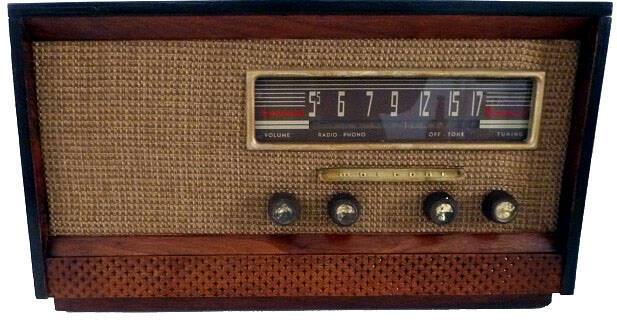
Mine too with tubes. I grew up with a "super" radio 6 tube AM radio by Marconi. Had the 6th tube, the RF amp that the common 5 tube radios didn't and was great for DXing at night. No noise wiping out the reception back then. Here's a picture of a similar one, not the exact one I had.

I had an uncle who worked for Zenith (I believe). I would mention my interest, and radios would magically show up on our porch. I remember a cabinet radio, about 4 feet tall, with a shortwave band as well. There were actually shortwave stations back then, and I got multiple QSL cards for listening in to their broadcasts.
At an early age I worked as an announcer operator of a 70 kW FM station. At 6 AM every morning I walked to a nearby corner to catch a city bus for a 2.5 mile ride downtown where I took an elevator to floor 21 to sign on the air by 7 AM. The giant output tube in the transmitter required warming by turning on the filament to warm the tube for 10-minutes before applying voltage to the plate. When the massive solenoid failed to respond, we opened the transmitter cabinet and used a wooden mop handle to push the solenoid in place.
Using this example, I wired my 50-Watt Eico audio amplifier so that I could light the filaments ahead of applying plate voltage. I imagined that this prolonged the tube life..