

If you'd like to play with an ai video generator for free, you are given 1,000 free credits until December 31
Do entirely text prompt videos or upload a image to change into video. Theres plenty of free video generators out there but you usually are permitted only 1 to 3 generations. With this one you get a thousand for the next two days
This picture was taken from one of the print article photos of Tim in Bovery.. I told the ai to have him demonstrate the audio equipment.. and it created a whole other unit of unknown gear!
So cool animating old newspaper images..
The promotion is over but you still get enough free credits per day to do 3 video clips. I've been mostly playing with animating existing images, but the text to video creations is pretty cool too. Problem is that it usually takes multiple times to get it to do what you want - so the trys is often not enough (same with music) it can be tricky wording the prompts, but sometimes it works on the first try.. like this one which is created from a 1940s Radio Craft magazine.
Oops.. forgot to attach. I experimented with the resulting image-to-video by using another site to convert that video into an animated gif, however even with heavy compression it ended up being 3mg, whereas the mp4 video was only 885kb.. So the gif turned out to be over 4 times bigger than the video! Not what I expected:
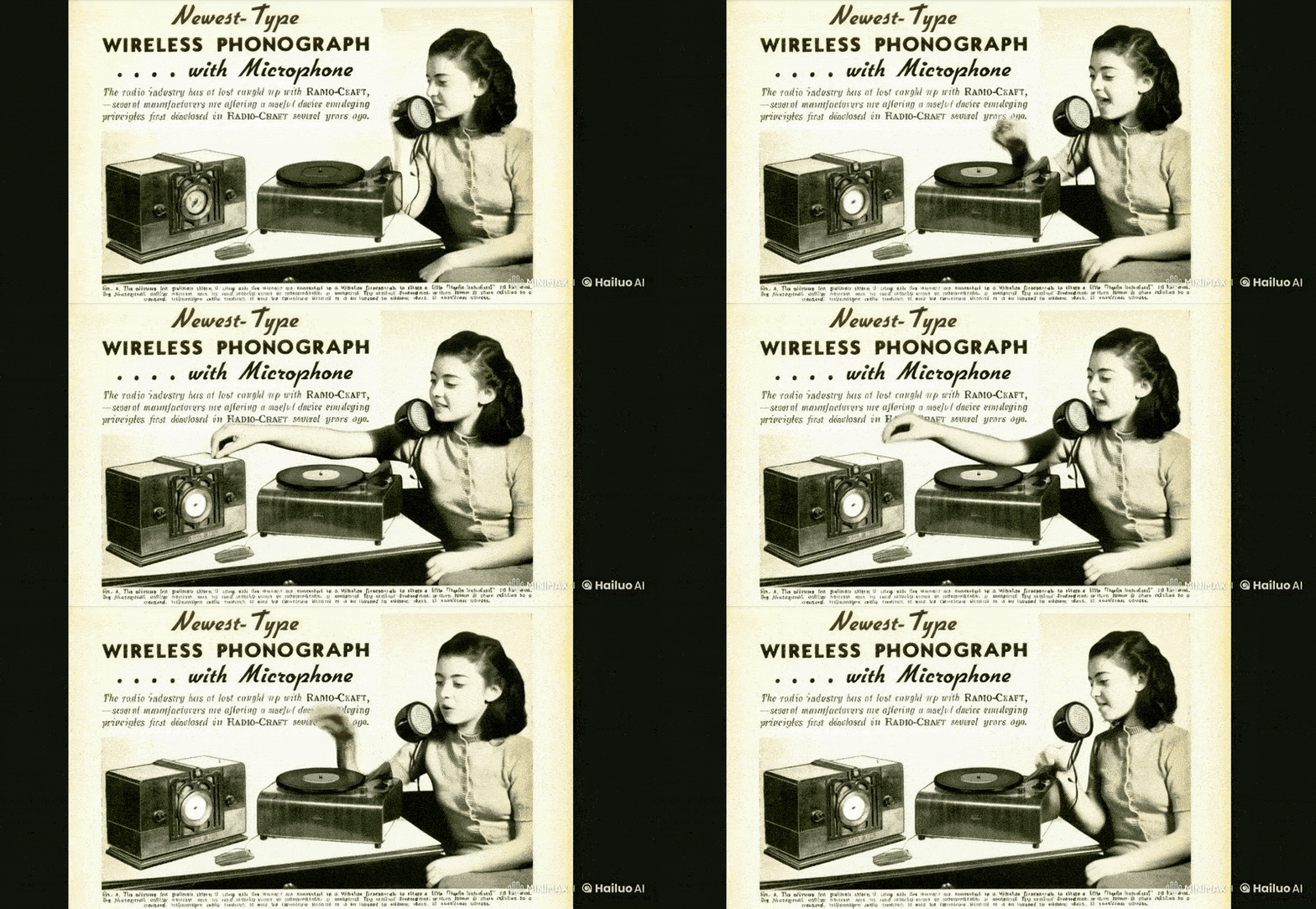
Since the gif takes to long to load the mp4 video which is much smaller file
works better.. and will also go full screen
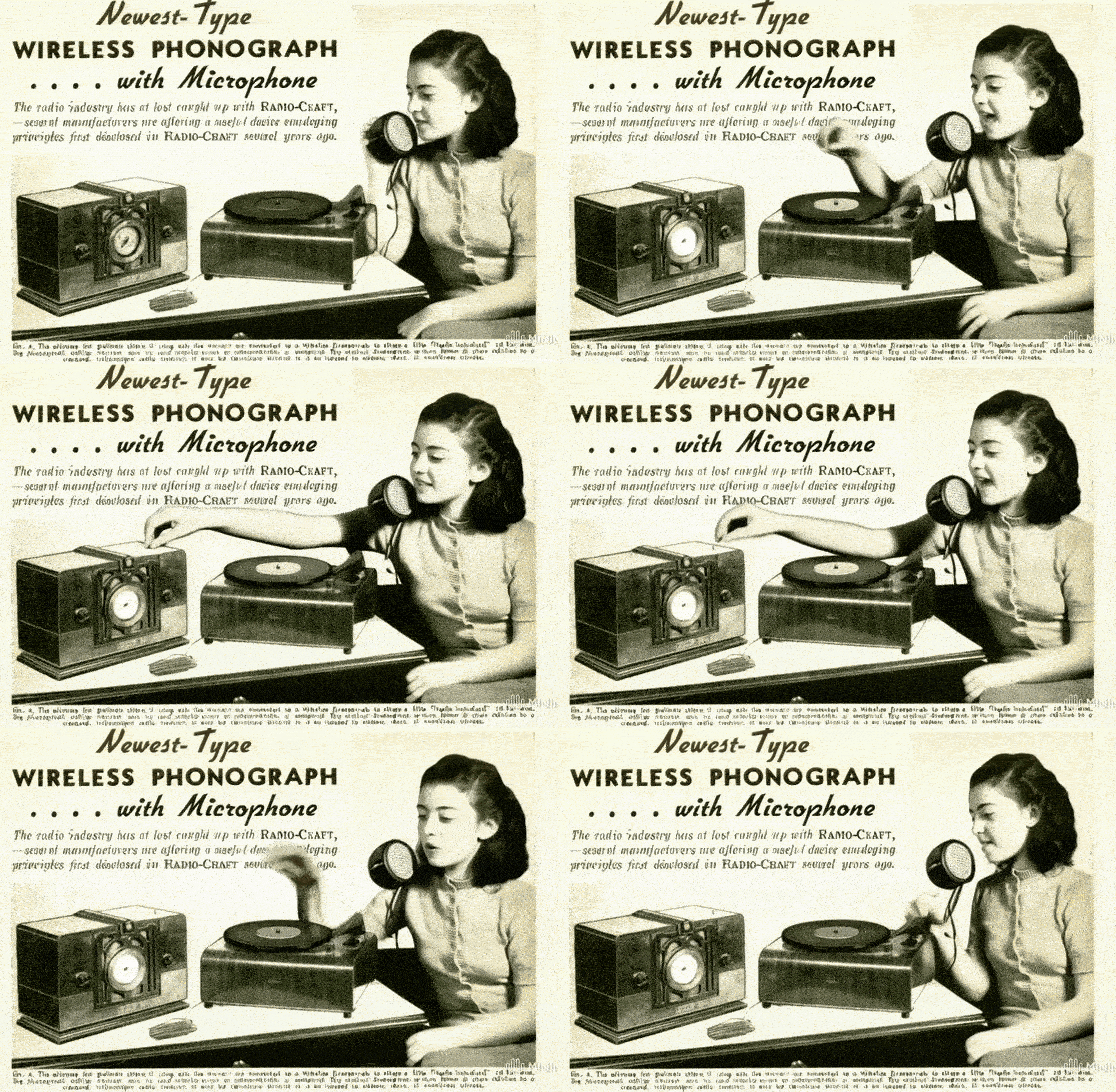
I know this seems very off-topic for part 15 which is why posting under "everthing else" category, but this experimentation is aiming towards use for part 15 history presentations.. not exactly sure how really, but that's the direction I'm going with it. Anyway, manage to cut the gif file size in half by reducing colors (greyscale in this case) and reducing the frame rate. I could do this a lot more effectively (easier and faster) using photoshop, but for now limited to what I can do on my phone.. anyway, same animated gif, now actually smaller than the original static image scan:

@richpowers Not getting sound but I wonder the time period that came out? Looks like the early 50s?
Or is this an AI creation?
No, not that late, I thought it was early 40s, but it's even earlier.. Radio Craft, Feburary 1939, only 3 months after the part 15 rules were created. You an download the entire issue from worldradiohistory.com
@mark Theres no sound. I meant that just like using an ai to create songs, it usually takes multiple try's to get it to do something close to what you want it to do..
For example, on this one I told it to have him blow the whistle, pick up the paper from the banister, yell out something then go up the stairs. The picture is from Time magazine 1940 of Hugh Dryfoos at Dartmouth college. His was the first College part 15 AM free-radiate radio station. It only served his dorm of 40 students in Russell Sage Hall. He used a unit very similar to the one shown with the girl in the Radio Craft 1939 issue. His was a "1 tube phono-occilator". It was not carrier-current like the one that Brown University had been doing since 1936. Carrier-current operations would not officially become a part 15 operation until 1947.
Anyway, Dryfoos would alert the dorm 5 minutes before broadcast by blowing a whistle in the stairwell, here shows a couple of the failed ai attempts to animate the Times picture in the way I wanted:
Attempt 1:
Attempt 2, I tried specifying a police whistle was used.
Attempt 3, I specified a coach's whistle..
Attempt 4 is currently in queue.. with the free plan you have to wait in line. Next week I'm probably going to subscribe for a month for $9.99 which gives more capability and less wait time and of course gives me more than 3 times a day..
This one took only 2 attempts to get right. This was one of the "Talking House concept" transmitters of the mid 1980s and one of the competitors to the Realty Electronic transmitters (our present day Talking House is essentially identical and under the same certification as the originals, the only difference is that the current model has the automatic tuning mechanism added). But these units were 3 times the price at about $1200, the Realty Electronics one l, after they added the cassette player was only about $400 in the mid 1980s , so the Amcast units never really took off, but it still was successful because another company bought them off and incorporated them into Muzak systems for department stores and other businesses.
In the first try as you see below, he takes the machine apart.. but it's a single unit, so all I had to do in my second attempt was to tell it "do not alter the device in any way"
Two more unsuccessful trys with the Dryfoos in the stairwell.. one put some kind of white band around his head for some reason and the other gave him three legs for a moment.. I wont bother to post those too, but it's just a heads up to anyone else who'd like to toy with these video generators - they are mildly crazy, but with perseverance you can eventually get it to do what you want.